
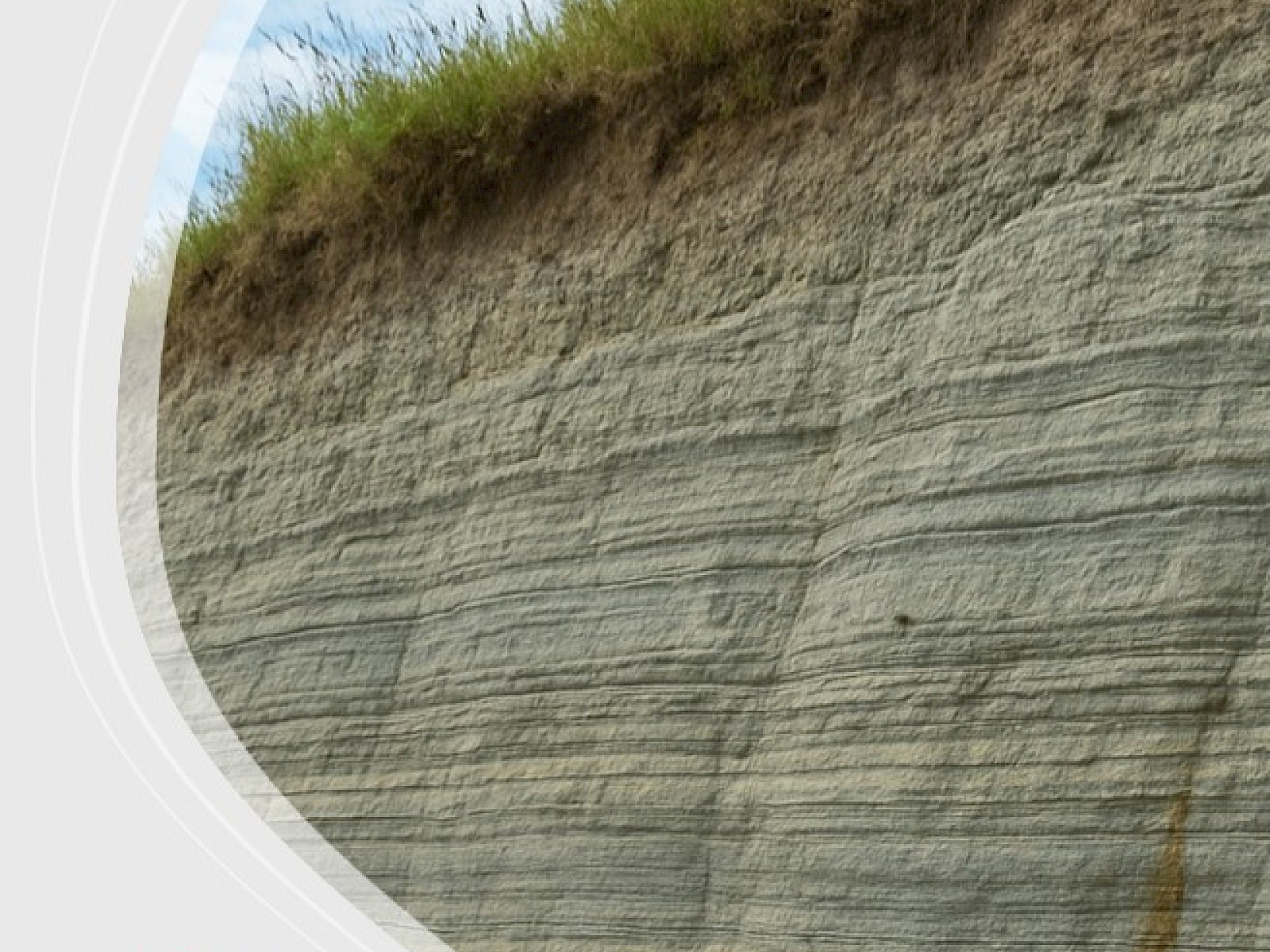
South Elmsall Geology - Glaciolacustrine Clay Deposits
The South Elmsall area lies within the Humberhead Levels, underlain by thick glaciolacustrine deposits formed during the Last Glacial Maximum (26,000–15,000 years ago) when the retreat of ice sheets created Lake Humber. In this calm proglacial lake environment, fine silts and clays settled in seasonal layers (varves), forming laterally extensive, laminated sediments up to 20 m thick. These deposits, belonging to the Albion Glacigenic Group, are uniform, highly consolidated, and exhibit extremely low hydraulic conductivity (10⁻⁹–10⁻¹¹ m/s), overlying Permian Magnesian Limestone bedrock. Their physical and geochemical stability, coupled with the tectonic stability of the Humberhead Levels, ensures predictable long-term performance.
These naturally engineered properties make the South Elmsall deposits ideally suited for material treatment. The clays provide a continuous, impermeable barrier that limits migration, immobilises contaminants and supports engineered structures through excellent load-bearing capacity. Additionally, their sorptive capacity and low biological activity offer further natural attenuation benefits. Leveraging these deposits contributes to sustainable land use and restoration strategies in the region.